

This super easy Greek salmon recipe is really not a recipe! Simple enough to memorize, you’ll soon be repeating it for a quick, healthy weeknight meal that’s full of flavor and comfort.
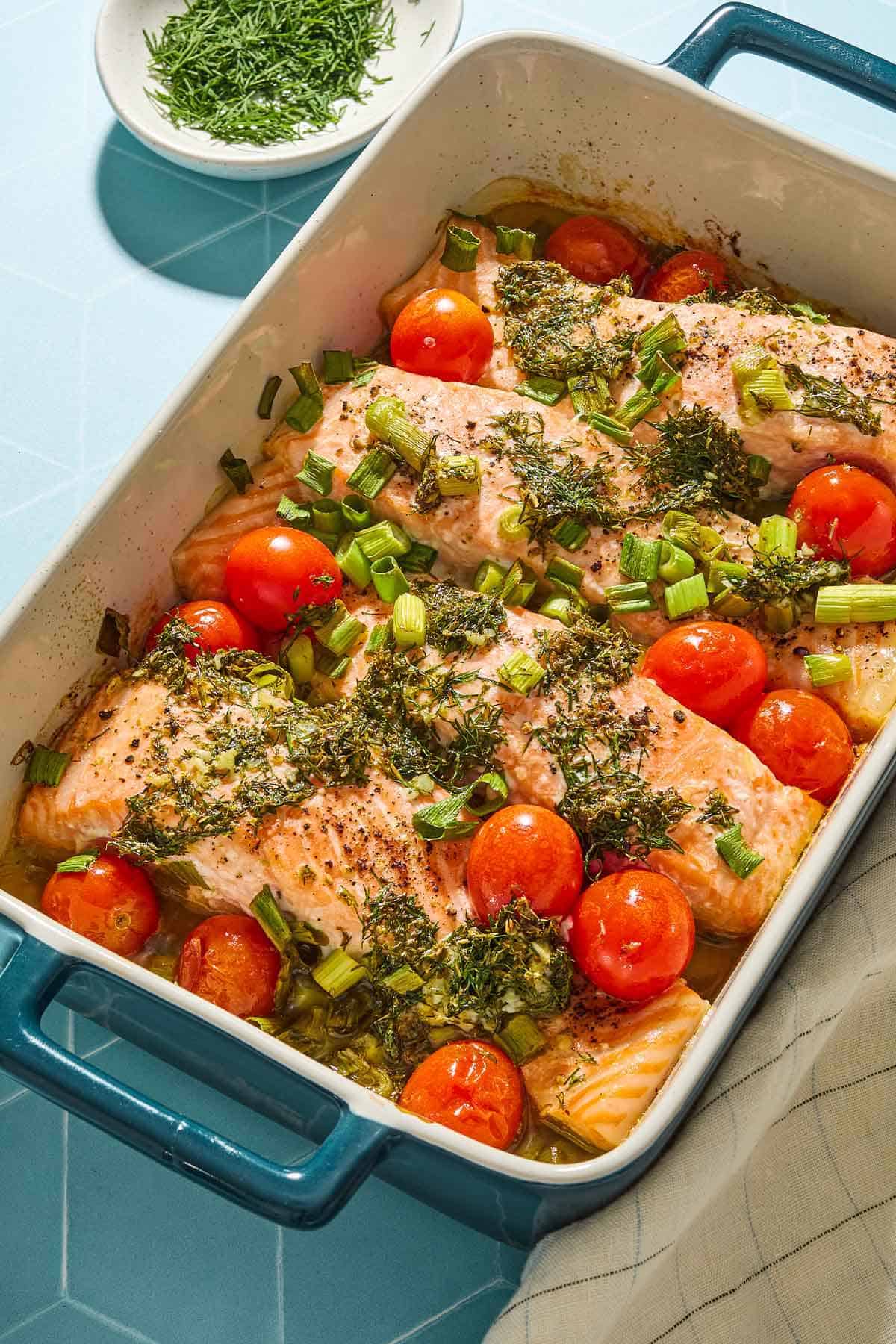
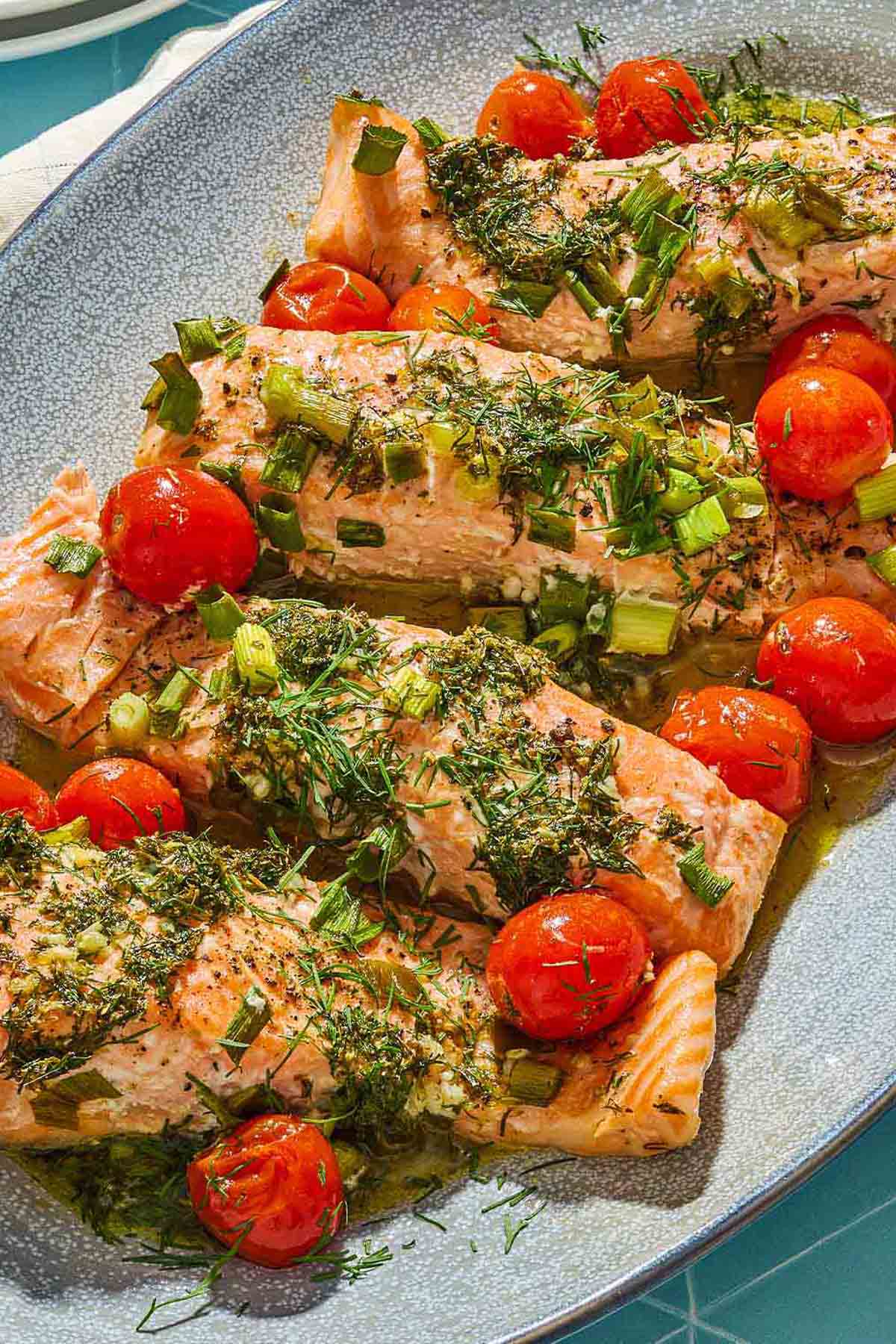
My Family Loves this Greek Salmon Recipe!
Put a Greek twist on your weeknight dinner routine with this super easy Greek salmon recipe! This Mediterranean fish recipe proves that keeping things simple doesn’t mean you have to sacrifice flavor.
I needed a quick dinner one night, and fish recipes are always at the top of my list when I need something quick and easy. I whipped up this salmon recipe for my family in 20 minutes, which in my book is a weeknight dinner win! To season it, I made a simple oregano-scented sauce made with lemon and garlic that gives the fish a rich Greek flavor. The sweet burst of cherry tomatoes, chives and dill add freshness to make this recipe truly irresistible.
Prepare a Greek Salad while the salmon grills, and you’ll have a healthy, colorful dinner on your table in 20 minutes or less.
Why You’ll Love This Recipe
- Ready in 20 minutes! Minimal prep work and a quick 15 minute bake in the oven!
- Bold Greek flavors: A bright combination of Greek oregano, fresh dill, lemon and garlic.
- Heart Healthy & High Protein: Naturally gluten-free, Mediterranean Diet friendly.
Greek Salmon Recipe Ingredients
While the taste is distinctly Greek, this easy grilled salmon is made with pantry essentials and simple ingredients you can find at almost any grocery store. You need:
- Although extra virgin olive oil plays a supporting role, his role is very important. Not only does it coat the fish, keeping it juicy while grilling, but it also gives the fish another flavor and a unique richness.
- Fresh dill and lemon the juices and zest enhance the richness of the salmon. You can swap it for parsley and lime.
- Garlic is an important ingredient throughout the Mediterranean and Middle East, adding sweet and savory flavors.
- Greek oregano adding aromatic, spicy notes that are very similar to textbook Greek (see “Ingredient Highlights” below for more information).
- Salmon: I prefer middle cuts because they are the same size throughout, ensuring even cooking. If you use tail pieces, watch the timer as they may cook 2 to 3 minutes faster.
- kosher salt And black pepper enhance other flavors.
- green onions adding another layer of sweet and savory flavor. Shallots, shallots, and spring onions all serve their purpose.
- Cherry tomatoes adds a burst of sweet and sour flavor.
Secret to Original Flavor: Greek Oregano
Oregano is a fragrant herb from the mint family. Fresh leaves and stems taste quite mild, but when dried, you get a stronger, more intense flavor. This often accounts for the earthy, spicy undertones and savory aromas that define Greek cuisine.
There are several types of oregano, the most famous being Greek, Italian and Mexican. Any variety can be used in this recipe, although I prefer the bold, aromatic taste of real Greek oregano. Whatever you choose, choose fresh, green leaves with a bright aroma, not brown or dull ones.
How to Make this Easy Greek Salmon Recipe
The steps are simple enough to memorize: Make a flavorful sauce, place the salmon and vegetables in a baking dish, cover with the sauce, and bake until cooked through.
Expert Tips for the Best Greek Salmon
- Pat the Fish Dry: Use a paper towel to remove excess moisture from the salmon fillets before seasoning. This helps the spices stick better to the salmon.
- Don’t overcook: The salmon continues to cook for several minutes after it comes out of the oven. For a buttery, flaky texture, remove the salmon when the internal temperature reaches 140°F, let it rest. The remaining cooking during the rest will bring it to the FDA recommended food safe temperature of 145°F.
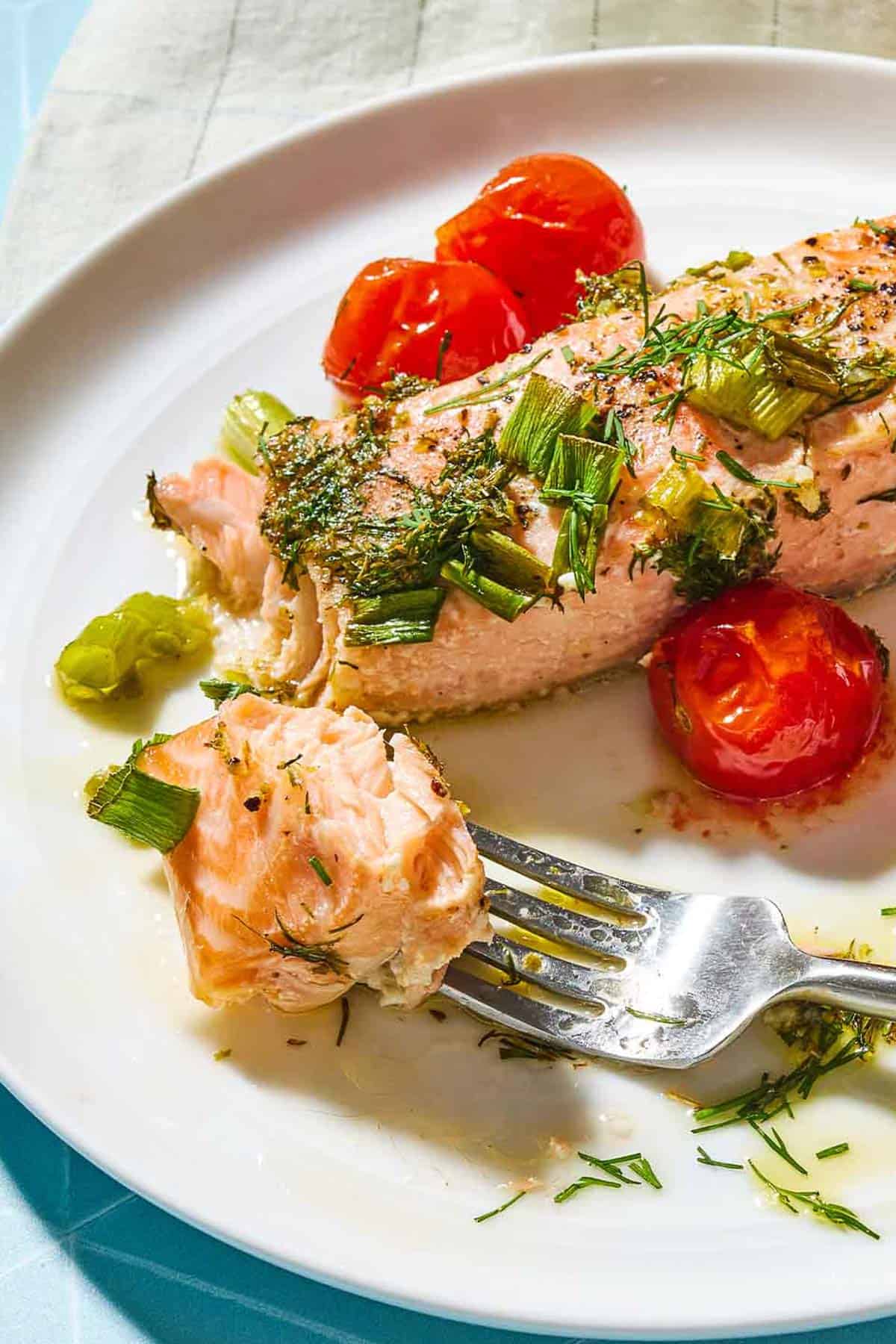
- “Splinter” Test: As mentioned below, use a fork to gently pull apart the thickest part of the fillet. If it separates easily into layers, it’s done!
What Does “Splinter with a Fork” Really Mean?
You’ll often hear the expression “flake with a fork” to describe fish that is thoroughly cooked. If you ask yourself, “What does that mean?” here is an easy step by step:
- Remove the fish from the oven.
- Insert a metal fork into the thickest part of the fillet. These are usually near the center.
- The fish will have “flakes,” almost like crackers, that move in one direction. Pull in the opposite direction.
- The fish will easily give in to your fork pulling it like that. If only the top is open but the middle is still stuck hard, it means it is not yet cooked. The center will also look pink. Put it back in the oven until it flakes!
How to Mix Them
You can absolutely use this easy Greek salmon as a base to adapt to what you have on hand or how you’re feeling that day. You will never get bored! Here are 4 ideas:
- Spice: Lemon and garlic go well with just about anything. Try Italian Seasoning or your favorite seasoning blend, like za’atar.
- Herbs: Any mild green herb, such as parsley or mint.
- Vegetables: Any vegetables that cook quickly, such as onions, zucchini, and bell peppers.
- Fish: Any fish with scales, such as cod or trout (adjust cooking time to the thickness of the fillet).
What to Serve with Greek Salmon
While this salmon flavor doesn’t have any Greek flavors, it’s a versatile protein that pairs well with any salad and grain.
More Salmon Recipes
-
Get ready. Position a rack in the center of the oven and preheat the oven to 400°F. Lightly grease a baking dish large enough to hold the salmon.
-
Make a Greek-style sauce. In a small bowl, whisk together the lemon juice, half the zest, garlic, oregano, dill, and enough olive oil to coat the salmon (about 1/3 cup).
-
Prepare the salmon. Pat the salmon dry and season with salt and pepper on both sides. Place in the prepared baking dish and scatter over the spring onions and cherry tomatoes. Spoon the Greek sauce over everything.
-
Grill the salmon. Bake in the preheated oven for approximately 10 minutes, or until the internal temperature reaches 140°. Cooking the remainder will result in a temperature of 145°F. When ready, the dough should flake easily with a fork. Sprinkle with the remaining lemon zest and dill, then serve.
- Shop this recipe: Visit our shop to browse quality Mediterranean ingredients including olive oil And oregano used in this recipe.
- To test doneness:
- Remove the fish from the oven.
- Insert a metal fork into the thickest part of the fillet. These are usually near the center.
- The fish will have “flakes,” almost like crackers, that move in one direction. Pull in the opposite direction.
- The fish will easily give in to your fork pulling it like that. If only the top is open but the middle is still stuck hard, it means it is not yet cooked. The center will also look pink. Put it back in the oven until it flakes!
Calories: 181.4kcalCarbohydrate: 5.4GProteins: 23.4GFat: 7.4GSaturated fat: 1.1GPolyunsaturated fats: 2.9GMonounsaturated fats: 2.4GCholesterol: 62.4mgSodium: 56.1mgPotassium: 708.5mgFiber: 1.6GSugar: 1.8Gvitamin A: 333.5IUVitamin C: 24.4mgCalcium: 47mgIron: 1.8mg
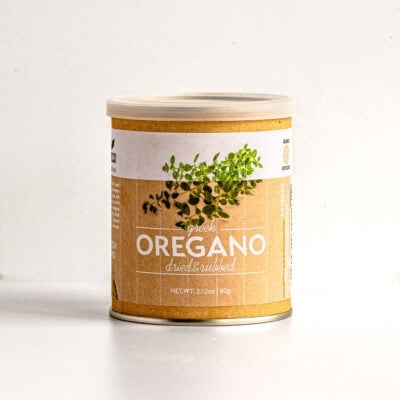
Try Our Greek Oregano!
This dried herb straight from Greece has a lemony taste, is fragrant, and is suitable for everyday use.
PakarPBN
A Private Blog Network (PBN) is a collection of websites that are controlled by a single individual or organization and used primarily to build backlinks to a “money site” in order to influence its ranking in search engines such as Google. The core idea behind a PBN is based on the importance of backlinks in Google’s ranking algorithm. Since Google views backlinks as signals of authority and trust, some website owners attempt to artificially create these signals through a controlled network of sites.
In a typical PBN setup, the owner acquires expired or aged domains that already have existing authority, backlinks, and history. These domains are rebuilt with new content and hosted separately, often using different IP addresses, hosting providers, themes, and ownership details to make them appear unrelated. Within the content published on these sites, links are strategically placed that point to the main website the owner wants to rank higher. By doing this, the owner attempts to pass link equity (also known as “link juice”) from the PBN sites to the target website.
The purpose of a PBN is to give the impression that the target website is naturally earning links from multiple independent sources. If done effectively, this can temporarily improve keyword rankings, increase organic visibility, and drive more traffic from search results.
Jasa Backlink
Download Anime Batch
Originally posted 2026-03-11 08:17:16.